
Wood and interior doors
Office doors, meeting room doors, washroom doors, sliding and pocket doors — the everyday openings that make up most of the doors in your building.
Most doors in a building are ordinary doors
A typical office floor has a handful of rated openings and dozens of ordinary ones. Meeting rooms, private offices, washrooms, storage, kitchens, server rooms, reception. They are used constantly and they wear out constantly.
We work on all of them. A door does not have to be fire-rated to be worth fixing properly, and a door that sticks, drags, slams or will not latch is a daily irritation for whoever uses it — and a complaint that lands on a facility manager’s desk.
If you have a door problem, it is very unlikely to be one we do not handle.
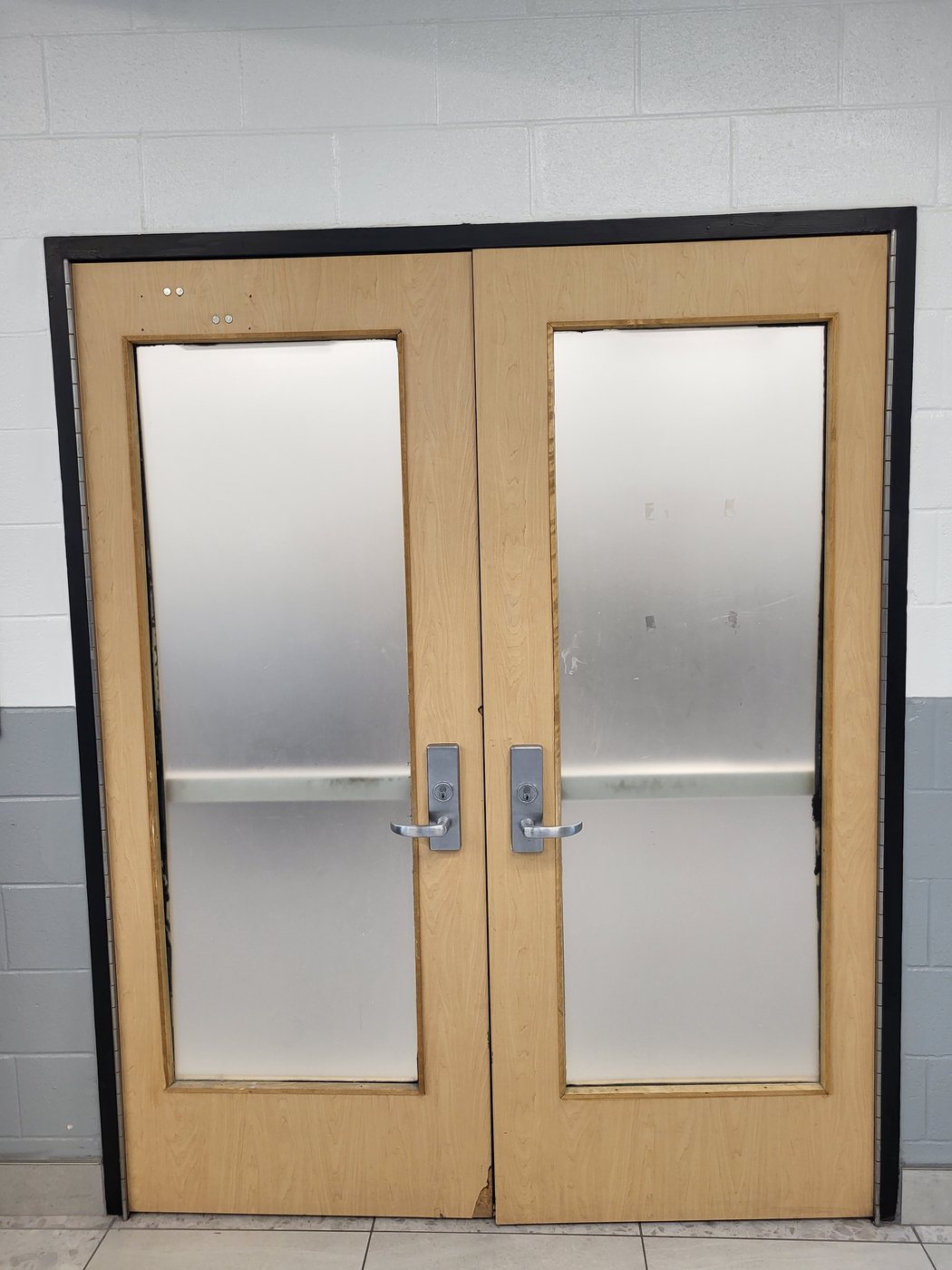
Interior door types
Solid core wood doors
The standard commercial interior door. Heavy, durable, and prone to sagging on its hinges precisely because of the weight. Offices, meeting rooms, institutional corridors.
Hollow core doors
Lighter duty, common in older fit-outs and back-of-house. Cheap to replace, easily damaged, and often not worth repairing once the skin is punctured.
Sliding, pocket & barn doors
Bypass, pocket, barn-style, telescoping and folding partitions. Different hardware, different failures — and a page of their own.
Sliding & pocket doors →Washroom doors
Among the highest-traffic doors in any building. Closers, privacy hardware, kick plates and constant wear.
Interior glazed doors
Office fronts, meeting room glazing and framed glass partitions. Pivots, patch fittings and concealed closers.
Fire-rated wood doors
Wood doors carrying a ULC label, common in institutional corridors and hotels. They look ordinary and carry the same obligations as steel.
The faults we see most
Interior doors fail differently from steel ones. Wood moves, and sliding hardware wears.
The door has dropped and drags on the frame
Solid core doors are heavy, and hinges take that weight every time the door swings. Screws loosen in the jamb, the door sags, and it catches on the frame or the floor. Usually fixed with longer fasteners, hinge shims or replacement hinges.
The door has warped
Wood responds to humidity, and it responds unevenly when one face is sealed and the other is not. A warped door will not sit flat against the stop, will not latch reliably and lets sound through. Mild warping can sometimes be worked around with strike and hinge adjustment; severe warping means replacement.
The latch does not catch
Strike misalignment from a dropped door or a moved frame, or simple wear on a lockset that has been used thousands of times. Quick and inexpensive to correct.
Surface damage
Veneer lifting, delamination at the edges, dents at push height, and damage at the base from trolleys and cleaning equipment. Repairable more often than people expect.
Some wood doors are fire doors
This catches people out. A wood door in an institutional corridor or a hotel can be a fire-rated assembly carrying a ULC label, and it looks identical to the one next to it that is not.
The consequence is real: a rated wood door that has been planed to stop it sticking, or drilled for new hardware, has had its certification invalidated by a repair that seemed entirely reasonable.
We check before we cut. If a door is rated, we say so and work accordingly.
Interior door work we carry out
Doors and frames
- Hinge replacement, shimming and correcting sag
- Easing, planing and re-hanging where the door is not rated
- Warped and damaged door replacement
- Frame and stop adjustment
- Veneer and surface repair
- Kick plates, armour plates and edge protection
Sliding and specialty hardware
Tracks, rollers, guides, pocket door systems, barn-style hardware and folding partitions are covered in detail on their own page.
Locks and latching
- Cylindrical and mortise locksets
- Privacy and passage sets
- Strike alignment and replacement
- Lever handles and accessible hardware
Closers and control
- Surface and concealed closers sized for the door
- Door stops and holders
- Soft-close and hold-open hardware
- Sound seals and smoke seals where required
Interior door questions
Do you only work on fire doors?
Our office door sticks in summer and is fine in winter. Why?
Is it worth repairing a damaged wood door?
Do you install new interior doors?
Can you do a whole floor at once?
Tell us about the door
A photograph and a sentence is usually enough for us to tell you what is involved and roughly what it will cost.
Have a whole floor of tired doors? We will walk it, note every opening and quote the lot as one piece of work.
Monday to Friday, 8am–5pm. After-hours by arrangement.
Request service
We reply within one business day.