
Storefront and glass entrances
Repair and maintenance of aluminium framed entrances, vestibules and glazed interior doors — the hardest working door in most buildings.
The first thing anyone touches
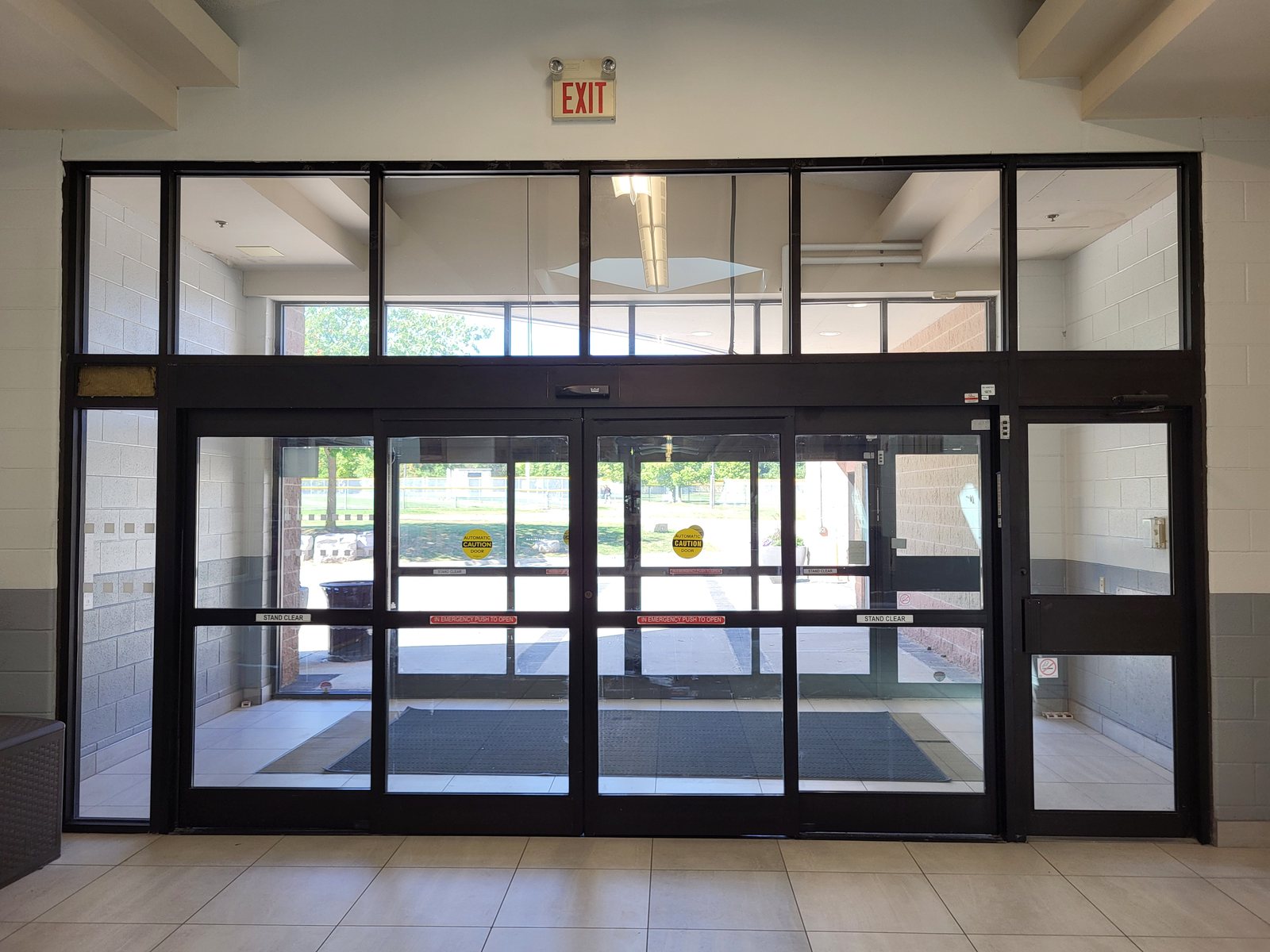
Aluminium storefront entrances are the front door of most retail, office and institutional buildings — glazed, framed in extruded aluminium, and opened hundreds of times a day.
That usage matters. A stairwell door might see twenty cycles a week. A main entrance can see a thousand a day, in weather, often with people pushing rather than pulling. The hardware wears accordingly, and unlike a back-of-house door, a failure here is seen by every visitor and every tenant.
These entrances are also where accessibility requirements bite. Opening force, closing speed and clear width are all specified, and a door that has drifted out of adjustment may be failing accessibility standards as well as annoying people.
Common faults
Worn pivots and bottom arms
Storefront doors usually pivot rather than hinge. Worn pivots let the door drop and drag, and are the most common structural fault we find.
Concealed closer failure
Overhead concealed and floor closers are harder to access than surface closers and are often left failing for months. Leaking fluid is the signal to act.
Doors out of square
Aluminium frames flex. A door that has racked will not seal, will not latch reliably, and lets weather and draughts through.
Lock and cylinder faults
Deadlatches, hook bolts and cylinder wear. Common on entrances that are locked and unlocked twice daily, every day.
Weatherstripping and sweeps
Perimeter seals and bottom sweeps wear out or get torn off. Beyond comfort, this drives heating and cooling cost and lets water in.
Glazing damage
Cracked or failed units, damaged glazing beads, and broken glass requiring board-up and replacement.
Cold changes how these doors behave
Hydraulic fluid thickens as temperature drops. A closer set correctly in July can barely close the door in February, which is why entrance complaints cluster in winter.
Add to that ice build-up at thresholds, salt corroding bottom rails and pivots, and the pressure differential a heated building creates against a cold exterior — which can be enough on its own to stop a marginally adjusted door from latching.
Seasonal adjustment of entrance closers is one of the cheapest pieces of preventive maintenance available, and almost nobody does it.
Push actuators and opening force
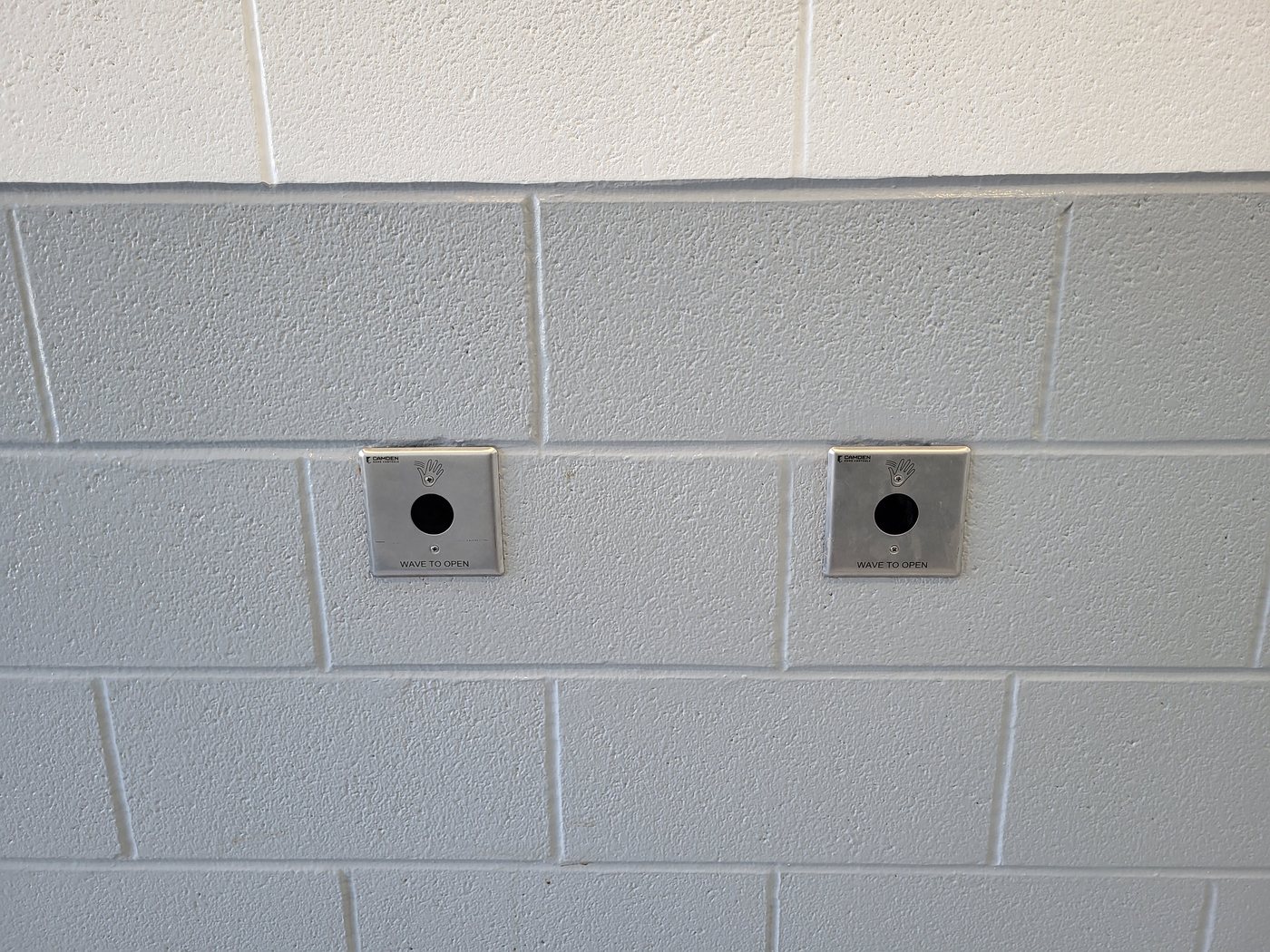
Accessible entrances rely on two things working together: a powered operator that actually opens the door, and a wall actuator that reliably triggers it.
Both drift out of service quietly. An actuator that needs a firm press rather than a light touch has already failed the people it exists for, and nobody reports it because most users never press it.
Opening force, closing speed and clear width are all specified under accessibility requirements as well as being practical matters. A door that has drifted out of adjustment may be failing those standards while appearing to work perfectly.
Cold changes how these doors behave
Hydraulic fluid thickens as temperature drops, which is why entrance complaints cluster in winter.
Are they fire doors?
Usually not. Exterior entrances are generally not fire-rated, because they do not close a fire separation.
But interior glazed doors sometimes are, particularly between a lobby and a corridor or stairwell. If there is a label, treat the assembly as rated and do not substitute hardware without checking.
Storefront work we carry out
- Pivot and bottom arm replacement
- Concealed, overhead and floor closer repair and replacement
- Door alignment and squaring
- Deadlatch, hook bolt and cylinder replacement
- Weatherstripping, sweeps and threshold replacement
- Push and pull hardware, panic hardware on glazed doors
- Glazing replacement and emergency board-up
- Opening force adjustment for accessibility compliance
- Seasonal closer adjustment for winter conditions
Entrance not closing properly?
Send a photograph of the door and the closer. We can usually tell you whether it is an adjustment or a replacement before we attend.